

Speaker profiles
Speakers and panels
Keynote presentations
Delegates from all concurrent conferences (AFAC26, ADRC26, WAFA26 and IFE26) are welcome to attend keynote presentations
From the pitch to the community: Leadership, culture and the power of belonging
 Craig Foster
Former Socceroos Captain, Broadcaster, Adjunct Professor, Author, Filmmaker, and Human Rights Activist
Following a decorated football career as Australia’s 419th Socceroo and 40th Captain, Craig Foster has become one of Australia’s most respected sports people as a broadcaster, social justice advocate and human rights campaigner.
With 29 caps for the Socceroos including as the 40th National Captain, Craig played for historic Australian clubs and was Captain of Crystal Palace FC in England.
A veteran of a 20+ year broadcast career with SBS television, part of the triple Logie-winning SBS World Cup football coverage and now covering the world game with Stan Australia.
Well known for his human rights advocacy, his high-profile campaigns include rescuing a young Bahraini refugee from a Thai prison, captured in the book “Fighting for Hakeem” and the documentary film “The Defenders” on Amazon Prime.
Craig also helped many Afghan women and girls to flee the Taliban in 2021 including the Afghan women’s National football team and a group of 15 young girls. This story was captured in the online, award-winning film, ‘Die or Die Trying: Escaping the Taliban’ and led the successful ‘Game Over’ campaign with Amnesty Australia to free hundreds of refugees trapped in Australia’s offshore detention regime.
He is a Member of the Order of Australia for services to multiculturalism, sport and refugees, the Australian Football Hall of Fame, served as Chair of the Australian player’s association where he led the push for gender equality, as Chair and Co-Chair of the Australian Republic Movement, was formerly Australian Father of the Year and NSW Australian of the Year, is the face of various anti-racism campaigns, an outspoken and committed advocate for multiculturalism and Member of the Australian Multicultural Council under the Department of Home Affairs.
An author and speaker, Craig holds a Masters in Sports Administration, a Bachelor of Laws, and an Honorary Doctorate of Laws from the University of Wollongong.
Human/AI decision making: How is the world changing?
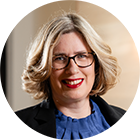 Professor Jenny George
Dean and Director, Melbourne Business School
Professor Jenny George is an experienced Dean, CEO and Company Director, shaping leadership in modern Australia. With a career spanning leadership in industry and academia, she has a track record of driving operational, digital and cultural transformation and using data, analytics and AI in new ways to drive innovation and outcomes.
As Dean of Melbourne Business School (MBS) and Co-Dean of Faculty of Business and Economics at the University of Melbourne, she heads Australia’s leading business school, home to a world-ranked MBA program and the largest executive portfolio in the southern hemisphere.
Prior to this, she was CEO of mental health provider Converge International for more than 7 years, leading significant business growth and digital transformation, improving psychological safety and culture in many of Australia’s largest organisations.
Earlier, in her first tenure at MBS as the inaugural Director of the Master of Business Analytics, she co-designed and ran the Master of Business Analytics program, ranked in the global top 15 today.
Professor George holds a PhD in Operations, Information and Technology from Stanford University and has served on the boards of a wide range of organisations.
From data to lived experience: What disasters mean for young people
Disasters are becoming more frequent, complex, and long-lasting, yet emergency management systems are still largely designed around infrastructure and households, often overlooking the distinct needs, experiences, and leadership of children and young people.
Grounded in the AFAC26 theme Leading together: Integrity, inclusion and impact, this session brings youth-informed perspectives into the heart of emergency management. UNICEF Australia Young Ambassadors will lead the session, offering a unique combination of lived experience, peer-informed insight, and youth-led solutions.
Young Ambassadors Layla and Lincoln will share firsthand experiences that bring the lived reality behind climate data to life. Despite growing up in different states, both have experienced the impacts of bushfires on their communities. Layla will also reflect on severe flooding during her HSC year, when she was cut off without power, internet, or access to school, highlighting how disasters disrupt education, wellbeing, and a sense of safety for young people.
These personal experiences will be connected to national evidence from a UNICEF Australia and Deloitte report, which highlights the significant and growing social and economic impact of climate disasters on children and young people. The session will also draw on youth-led advocacy and consultations the Young Ambassadors have led across Australia, elevating the voices and experiences of young people nationwide.
By combining lived experience, evidence, and youth co-designed initiatives, this session offers a perspective that bridges personal insight with system-level change, repositioning young people not just as affected populations, but as essential partners in preparedness, response, and recovery.
 Layla Wang
Young Ambassador, UNICEF Australia
Layla is a UNICEF Australia Young Ambassador who is currently studying a Bachelor of Arts in Politics and International Relations. Layla played a key role in shaping the 2025 National Child and Youth Statement on Climate Change by facilitating youth climate consultations across Australia. She has met with Members of Parliament in Canberra to advocate for youth voices to be at the forefront of climate policy.
Growing up in a regional area, Layla experienced devastating floods in 2022, which severely impacted her final year of study. She has seen and experienced firsthand the long-term damage a climate disaster can have on youth and a community. Layla is passionate about ensuring others don’t have to endure what she did and advocates for all children and young people in the area of climate and mental health. She has served as a Reach Out Youth Advocate, was a school strike 4 climate organiser for Shoalhaven and is the President of the Sydney Arts Students’ Society.
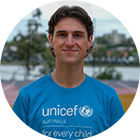 Lincoln Ingravalle
Young Ambassador, UNICEF Australia
Lincoln is a UNICEF Australia Young Ambassador who grew up in Gippsland, a coal-powered community deeply impacted by the Black Summer bushfires and now at the centre of the clean energy transition.
Lincoln played a key role in shaping the 2025 National Child and Youth Statement on Climate Change by facilitating youth climate consultations across Australia. He was part of writing this statement which he presented to Members of Parliament in Canberra and to the UN Secretary General at COP30 in Brazil.
Lincoln has spoken on panels at Climate Action Week and COP30 making sure youth are at the forefront of discussion around disasters. With an academic background in international relations and climate governance, he connects local realities with global climate solutions. He is also the Co-Chair of Gippsland Youth.
 Anica Renner
Young Ambassador, UNICEF Australia
Anica is a UNICEF Australia Young Ambassador who has experience in grassroots organising across climate activism and political campaigning. She was one of the lead organizers of the ‘School Strike 4 Climate’ movement in Melbourne, and has taken on leadership positions with the ‘Australian Youth Climate Coalition’.
More recently she campaigned for the ‘Duty of Care’ Bill: a legislative amendment to establish that the Australian Government has a duty of care to young people to take action on climate change. Last year she worked on a successful independent federal election campaign, and has just returned from completing her final year of studies in India where she saw first hand the impacts of climate change on vulnerable communities in the Global South

Adriel Appathurai
Young Ambassador, UNICEF Australia
Adriel is a UNICEF Australia Young Ambassador and medical student with experience across climate, health, disaster resilience and public policy. As a young person from a Sri Lankan Tamil refugee background, he is passionate about ensuring young people and communities with lived experience are meaningfully included in the decisions that affect them, particularly as climate disasters place growing pressure on health systems and community resilience.
Adriel advises YACVic’s Centre of Excellence in Young People and Disasters, serves as Climate and Health Lead at the Australian Medical Students’ Association, contributes to work on climate-resilient and low-carbon health systems through the WHO's Alliance for Transformative Action on Climate Change and Health, and serves on the National Council of the Australian Red Cross.
The Franklin River rescue: Collaborative leadership, rigorous training and absolute trust in Tasmania's wilderness
 Dr Jorian Kippax
Emergency Doctor, 2026 Tasmanian of the Year
Dr Jorian (Jo) Kippax was part of a specialist team of rescuers tasked to free a whitewater rafter who was trapped in perilous rapids on the Franklin River in 2024. Lithuanian whitewater rafter, Valdas Bieliauskas, was retrieved from freezing water by Jo and his team. The clinical team operated to amputate Valdas’s leg underwater, allowing him to be freed and ultimately saving his life.
Throughout the rescue, Jo was instrumental in guiding the team with professionalism, courage and remarkable calmness under pressure. For this life-saving act, the President of Lithuania, Gitanas Nausėda, awarded the country’s Life Saving Cross award to Jo, which he humbly accepted on behalf of his team.
The rescue of Valdas is just one chapter in Jo’s long career in emergency medicine, disaster response, and search and rescue. Demonstrating outstanding skill, courage and team leadership in the aid of others, Jo displays selfless dedication to saving lives in often very challenging circumstances.
Presentations | Day 1
ADRC26 delegate passes are valid for ADRC26 streams, but not for AFAC26, WAFA26 or IFE26 streams

Kate Retzki
Office of the Inspector-General of Emergency Management
Does anyone have a crystal ball? Shifting mindsets for the future of Queensland disaster management
The future of disaster management demands transformative leadership that adopts foresight and defies short-termism. In 2025, the Office of the Inspector-General of Emergency Management (IGEM) commenced a commitment to help transform DM through two initiatives: the IGEM Futures Connect Round Table and the Queensland Disaster Futures Champions Summit. These events brought together leaders from each Queensland Government agency to confront the pressing need for a paradigm shift. This presentation will share the insights and ideas for action that emerged from these 2025 events.
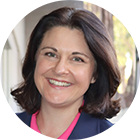
Amy Crawford
Australian Local Government Association
The power of local: How councils are partnering with communities to build equitable resilience
Research shows that councils build social capital and strengthen community resilience through local events and programs which can lead to better outcomes after a disaster. This session will share practical tools and provide a grounded, realistic view of what it takes to build resilience collaboratively between local government and communities.
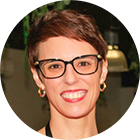
Dr Adriana Keating
Monash University
Practicing the transformational community resilient mindset through partnerships
There is a paradox holding back disaster resilience in Australia: whilst everyone agrees mindset change is needed, each stakeholder believes it's someone else who needs to change. This presentation shows practical ways that genuine partnerships can be fostered to shift systems and help break this deadlock. We will share insights from the Flood to Flourish project, as well as new, scalable methods and tools for fostering partnerships and enabling mindset shifts in diverse contexts.
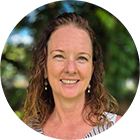
Annette Plowman
Douglas Shire Council
Locally led, community powered: Transforming recovery governance through the Douglas Recovery Resilience Sub-Plan
This presentation will share the Douglas Shire Council's journey in designing and embedding the new community model, the challenges and the cultural shifts required to transition to community directed recovery governance, and the practical tools that other local governments can immediately adapt. The Douglas Recovery Resilience Sub-Plan (DRRSP) demonstrates that when communities are empowered to lead, resilience becomes not an aspiration but a lived reality.

Dr Kate Brady
HowWeSurvive, University of New South Wales
Are we preparing for disasters?
As the body of evidence grows, so too does our responsibility to act on it. This presentation will challenge governments, service systems and organisations to move beyond the 72‑hour model and adopt a mindset that is grounded in lived experience and contemporary research, ensuring that communities are supported not only to survive hazards, but to recover and thrive in the years that follow.

Dr Iftekhar Ahmed
University of Newcastle
Is the 'global' missing in the 'local'?
This case study of the Hunter Region is a microcosm that reflects the wider situation in many regional parts of Australia where challenges persist in translating global frameworks (SDGs, SFDRR) to the local context; predominance of an emergency management approach instead of a long-term resilience strategy; and an urban development paradigm that does not consider future risks.

Miriam Lumb
Department of Premier and Cabinet, South Australia
An adaptive and systems-based mindset: Lessons from South Australia's harmful algal bloom
This case study will explore how the management of South Australia’s HAB led to a shift in the
mindset of emergency managers through recognising that the traditional, agency-led, linear phased
approach required adjusting to a systemic and collaborative, multi-sectoral model integrating
emergency management, environmental science, academia, industry, First Nations and community
representation.

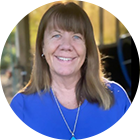

PANEL | Shifting disaster funding power: Community-led resilience in the Northern Rivers
What happens when decision-making power shifts from institutions to communities? This panel explores the transformative journey of the NRMA Insurance Help Fund in the Northern Rivers, an initiative redefining how disaster resilience is funded, designed, and delivered.
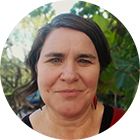

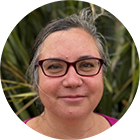
Nature for resilience: Innovative disaster resilience solutions through nature
Nature-based solutions (NbS); such as mangroves protecting coastal infrastructure from storm surges, improving soil health, wetland restoration, stream bank stabilisation and appropriate fire management; can help address and adapt our ecosystems to climate challenges and provide resilience against extreme events.


Lessons in resilience: Organisation and community adaptation in Melbourne's West (2019-2025)
Narratives of resilience and successful local action are essential to strengthening community adaptation to climate change. This project addresses a critical gap in understanding how communities and institutions in Melbourne’s west respond in practice to compounding climate related hazards, offering evidence‑informed recommendations for strengthening justice-centred approaches to climate and disaster resilience.

Nick Grant-Collins
Bass Coast Shire Council
Energy resilient community hubs: Fusing infrastructure with social capital
This presentation shares the development and implementation of an innovative program led by Bass Coast Shire Council to establish a network of Energy Resilient Community Hubs across the municipality.


From emergency management to shared responsibility: Partnerships that shift systems for people most at risk
The session examines how funding models shape the ability to scale and sustain change. Disaster Recovery Funding enabled the expansion of the People at Increased Risk in Emergencies (PaIRE) activities and deeper sector engagement, while simultaneously highlighting critical tensions in funding arrangements.



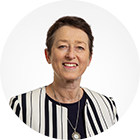

PANEL | Opening your mind(set): Taking action with young people for disaster resilience and risk reduction
In this panel we consider youth-focused disaster resilience that take a strengths-based approach with young people. We have brought together young panellists from WA and Victoria to speak to this approach, including the Inochi Declaration that calls for Young Disaster Resilience Leaders, as a new governance model, an overview of Consultation data focused on Collaboration & Translation between young people and emergency management organisations, and community-informed power sharing strategies that meet the unique needs of local populations.

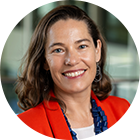
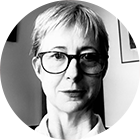
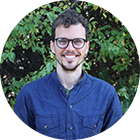
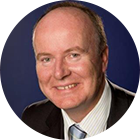
PANEL | Shifting the scales: Embedding justice and equity in Australia's disaster law system
Communities already experiencing marginalisation—including First Nations peoples, multicultural communities, people with disability, older people, young people, and rural and remote communities—face disproportionate legal, social, and economic harms before, during, and long after disasters. This panel examines how domestic and international legal frameworks shape these inequities and how policy and governance reform can redistribute power to communities most affected.
Presentations | Day 2
ADRC26 delegate passes are valid for ADRC26 streams, but not for AFAC26, WAFA26 or IFE26 streams
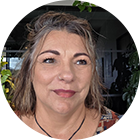

Maintaining and promoting dignity for Aboriginal communities in preparedness and recovery
Two weather events in close succession throughout 2025 on the North Coast of NSW offered opportunity to engage with Aboriginal communities in different ways, responding to place-based priorities, designed with
community. This presentation will showcase outcomes for different communities that demonstrates flexibility. These examples place dignity, cultural safety and Aboriginal leadership at the centre of disaster preparedness and recovery.

Dr Colin Gallagher
University of Melbourne
Separation in a bushfire and its long-term effect on mental health: Longitudinal findings
It is often assumed that if separation does not result in actual harm, its long-term psychological impact will be limited. Although a small number of studies have challenged this assumption, surprisingly little empirical research has examined acute separation at the height of a disaster as a distinct form of individual-level hazard exposure. This presentation reports on a longitudinal follow-up to earlier work with people affected by the 2009 Black Saturday bushfires. Longitudinal analyses examine how separation experiences and relational factors relate to longer-term PTSD symptoms.

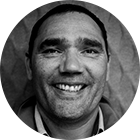
Embedding cultural heritage protection into disaster planning and response
The Cultural Heritage Unit (CHU), developed and led by Traditional Owner staff from DEECA and Parks Victoria and jointly led with Traditional Owners from the Registered Aboriginal Parties, showed that when cultural authority is embedded within incident structures, resilience is strengthened for communities and Country alike. This presentation reflects on that experience and looks ahead to how these learnings are now shaping proactive, system level change in disaster planning and emergency response.


Long-term health impacts of the 2019-2020 bushfires in regional communities
This presentation reports findings from a population health survey examining long-term health outcomes among adults living in rural communities affected by the 2019–2020 bushfires. Positioning mental health as a sustained and central component of policy and service planning may better align supports and funding cycles with the lived realities of recovery in fire-affected communities across rural and regional Australia.
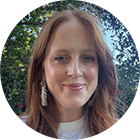

Vulnerable to valued: A national framework to enhance the resilience of Indigenous people and communities
This presentation will introduce the 'National Framework to Enhance the Resilience of Indigenous People and Communities', the first national policy for disaster response and resilience focused on Indigenous people and communities. The Framework has been developed by National Indigenous Disaster Resilience, with support from the National Emergency Management Agency and Natural Hazards Research Australia. The Framework will enhance the capability of the disaster response and resilience sectors to support Indigenous resilience.

Elly Bird
Resilient Lismore
Resilient Lismore: Rebuilding homes, restoring wellbeing and enhancing resilience through trust-based community-led recovery
Disaster recovery systems often frame housing repair as a technical task, separate from psychosocial recovery. This presentation challenges that mindset, demonstrating that safe, dignified homes— delivered through trust-based, relational practice—are a foundational resilience and wellbeing intervention.
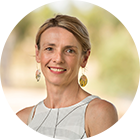
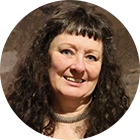
Don't forget the Arts! Harnessing creative pursuits that build resilience
This presentation will show how through Foundation for Rural & Regional Renewal grants, small grassroots organisations around rural and remote Australia have captured the power of creative endeavours to help their communities prepare for disasters.
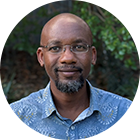
Richard Ogetii
Albury Wodonga Ethnic Communities Council
When multicultural communities' leadership leads, systems follow
As disasters become more frequent and complex, the lesson is clear and transferable. The MEMP model offers a practical pathway for other states to centre multicultural leadership, share power before crisis, and drive system wide reform. When leadership is local and trusted, resilience becomes equitable, scalable, and enduring.

SPECIAL EVENT | Lightning storytelling: Tales from accidental disaster resilience advocates
This presentation is a curated set of short, story‑driven lightning talks from people who didn’t start in disaster risk reduction but who became powerful resilience advocates through lived experience, community work, policy moments, unexpected career pivots, or creative practice. This series will humanise the theme, showing how mindsets change in real life, and what others can copy tomorrow.


Shifting disaster resilience in ageing populations: What can we learn from other countries?
Using the Recovery Capitals framework and Community Resilience Theory, the review explored how social and community supports were provided for and by older adults and their communities. Our key findings include how vulnerability and capacity were perceived for individuals, communities and the broader society; the salience of social capital as a preparedness and recovery resource; and a need to prioritise holistic, inclusive, and strengths-based approaches.


Collaboratively supporting healthy childhood development, wellbeing and resilience in disaster settings: Thriving kids in disasters
This presentation will share insights from the Thriving Kids in Disasters (TKiD) journey, including how partnerships are formed and sustained, how evidence and lived experience are translated into action, and lessons learned about shifting systems to better support children and their caregivers in and beyond disasters.

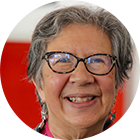
PANEL | Converging threats: Building social cohesion in the context of multiple disasters, disinformation and extremism
The panel will examine the emergence of two trust realities which have significant implications for emergency management and psychosocial resilience and wellbeing. Distrust in government and government information is often based on social and economic inequality. There is also a tendency for government officials to extend more trust to those communities who understand how government works, and who use the technical language of government policy, funding and budgets. We need to better understand these trends and how distrusting official information for some becomes a rational choice.
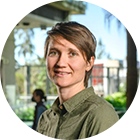

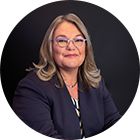
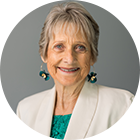
PANEL | Relocation and retreat in practice: What's working, what's hard, what's next
This session presents the Community of Practice on Relocation, Retreat and Resilience in Australia (COPRRRA) as a national platform for knowledge exchange, collaboration, and applied learning, bringing together community leaders, government representatives, planners, researchers, NGOs, and policy actors. We examine how sustained cross-sector relationships, shared problem framing, and iterative learning can strengthen relocation and retreat governance across scales.
Event partners and supporters
The Australian Disaster Resilience Conference will run in partnership with AFAC26, Australasia's largest and most comprehensive emergency management conference and exhibition.
Event Partner
AFAC26 powered by INTERSCHUTZ
AIDR Funding Partner
National Emergency Management Agency
ADRC26 Industry Partner Sponsor
IAG
AFAC26 Resilience Lane Sponsor
NRMA Insurance | A Help Company
AFAC26 Roundtable Breakfast Sponsor
NSW Reconstruction Authority
ADRC26 Community Partner Sponsor
Emergency Management Victoria
ADRC26 Knowledge Stream Sponsor
Victoria State Government